


We all have the need to have loving and supportive relationships with others, as a partner, a friend, or a relative. We try our best to show our love and support to those we care about, but it is not always easy. Sometimes, even with our best intentions, relationships can be fraught with tension, communication difficulties, or conflict. Sometimes, we realise that we seem to repeat relationship patterns, despite our best efforts not to.
It is long established that the way we came into the world and how we were nourished and resourced by those around us matters. It will influence the way we attach ourselves to others. We are born into systems of human relationships and patterns of behaviour alongside our own unique qualities and ways of being. New relationships can be challenging and can potentially bring painful feelings into our awareness.
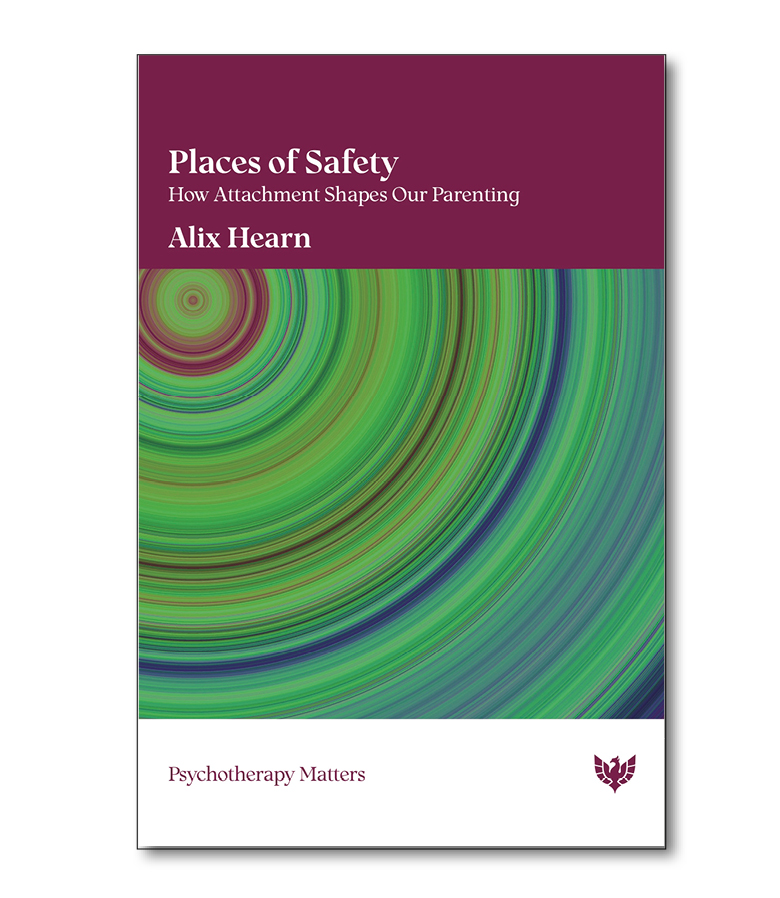
As a child and adolescent psychotherapist, Alix Hearn believes that the more we can learn about how we were parented by our own parents or carers, and our earliest influences, the more we can learn about how to parent and to care for others and ourselves. If we can understand the roots of our behaviours and ways of relating, we have choice on how we react.
Using a wider, systemic lens, Hearn explores how attachment shapes and informs our parenting, including ideas from the latest in attachment theory, neuroscience, child development, and eco-systemic thinking. The western, behavioural-medical model tends to focus on pathology and symptom management within mental health, rather than looking under the surface and considering other, environmental influences. In child mental health and work with children and young people, there is a tendency to view the child as ‘problematic’ and in need of ‘treatment.’ Hearn highlights the need to consider the myriad influences on our lives, from pre-birth to epigenetics to the impact of earlier losses, and the importance of holding these all in mind when working with children and their families.
The book is aimed at anyone working with children and young people – particularly child mental health professionals, psychotherapists and counsellors – psychotherapy and counselling trainees and students, those interested in psychology and sociology, and for caregivers who are interested in discovering more about this area. It is a vital resource to help support children and young people along their journey to grow and flourish.

Graham Music, Consultant Child and Adolescent Psychotherapist, Tavistock Centre –
‘I would recommend this book to therapists and others interested in a broader interpretation of attachment, one which takes in a wider systems and ecological perspective. This book is written with an open mind and a big heart and will be helpful for a wide variety of readers.’
Tamsin Cottis, child psychotherapist and author of ‘How it Feels to be You’ –
‘In Places of Safety, Alix Hearn offers a clear and expansive exploration of attachment theory. Here we read how neuroscience, our natural environments, systemic disadvantage, racism, global inequality, and climate emergency, intersect with, and impact our attachment experiences. This book is essential reading for psychotherapists and other mental health professionals who seek to root their practice in the wider context of their work. It will also enrich the thinking of anyone who seeks a deeper understanding of themselves in relation to the significant people and places in their lives.’
Mary-Jayne Rust, ecopsychotherapist and author of ‘Towards an Ecopsychotherapy’ –
‘At last, what a relief to see a text on attachment theory which includes the ecological. Of course we form attachments with animals, plants, places, and the land. Sometimes these are life-saving, especially when human relationships have failed. Our bonds with the more-than-human world are a vital source of love, teaching us about life, death, and all the complexities in-between.’