


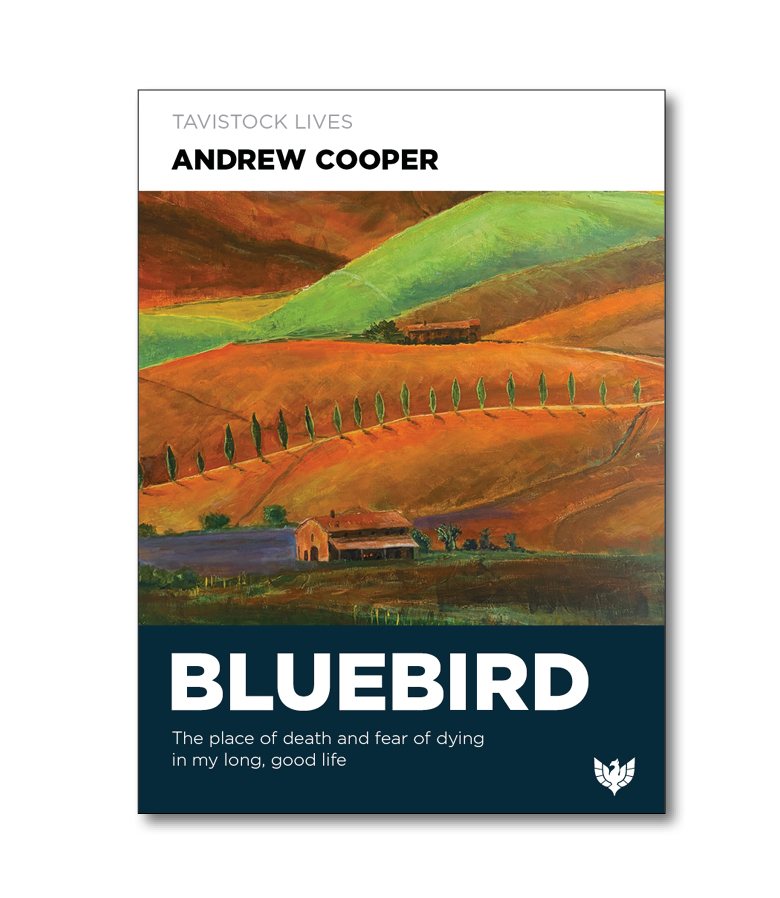
This posthumous memoir by Andrew Cooper is the first book in the Tavistock Lives series. It traces connections between early experience and later physical and mental pain, and between personal fears about death and dying and the wider societal forces that shape our responses to them. It is also a rich exploration of the life-enhancing potential of psychoanalytic psychotherapy – which Andrew credits with saving his life. Psychotherapy takes its place alongside physical medicine, which enabled Andrew to overcome two episodes of cancer in his youth followed by further serious illnesses leading to hospitalisation and life-long medication. The book is at once a story of a life and an intelligent enquiry into lived experience. Andrew confronts the existential questions that haunt us all, reflecting on past encounters, revisiting long-held beliefs, and exploring the revelations of dreams.
Andrew inspired many throughout his professional life, and his final book does so again – this time on a more personal level. Bluebird sings a song of hope as it looks back on a long, good life. It is the ideal companion for those drawn to life stories and those seeking answers to life’s biggest questions.
 Andrew Cooper was a registered social worker and psychoanalytic psychotherapist and Professor of Social Work at the Tavistock Centre and the University of East London. He practised as a clinical social worker in the Adolescent Family Therapy service at the Tavistock, led the Professional Doctorate in Social Work and Social Care programmes there, and worked as a consultant to teams and organisations. In addition to his books Borderline Welfare: Feeling and Fear of Feeling in Modern Welfare (co-authored with J. Lousada, 2005) and Conjunctions (2018), he has written widely about therapeutic and relationship-based social work practice and research as well as the policy contexts that support or impede these practices.
Andrew Balfour, PhD, Chief Executive, Tavistock Relationships –
‘This is a wonderful, deeply moving book. Andrew Cooper has left us a tribute to life in exploring our human struggles in thinking about death. This is autobiographical writing at its best. It is a privilege to accompany him in tracing the worlds of meaning discovered in his exploration of the interplay of internal and external realities, of body and mind, thrown into relief by illness and mortality. Andrew’s voice is clear and distinct as he shows us the value of seeking the truth of our internal experience, helping us to find meaning in life, in thinking with us about death. The result is a gift to the reader, an example of how we may stay with ourselves, and our reflective capacities, in facing illness and death, alive to the truth of our inner experience, even in facing these most difficult truths of all.’
Margaret Rustin, child, adolescent and adult psychotherapist, and child analyst –
‘This is an intensely personal book about the meaning of death within life and the impact of life-threatening illness on a man’s relationships to himself and others. It draws on Andrew’s memories from early childhood onwards and on his inner life as he came to understand it through life experience, personal therapy, and attention to his dreams. It is also a powerful exploration of our society’s relationship to illness, loss, the end of life, and death. This conjunction of the most intimate with the communal is rare and gives this book its unusual focus and depth, its capacity to disturb and to illuminate.’