


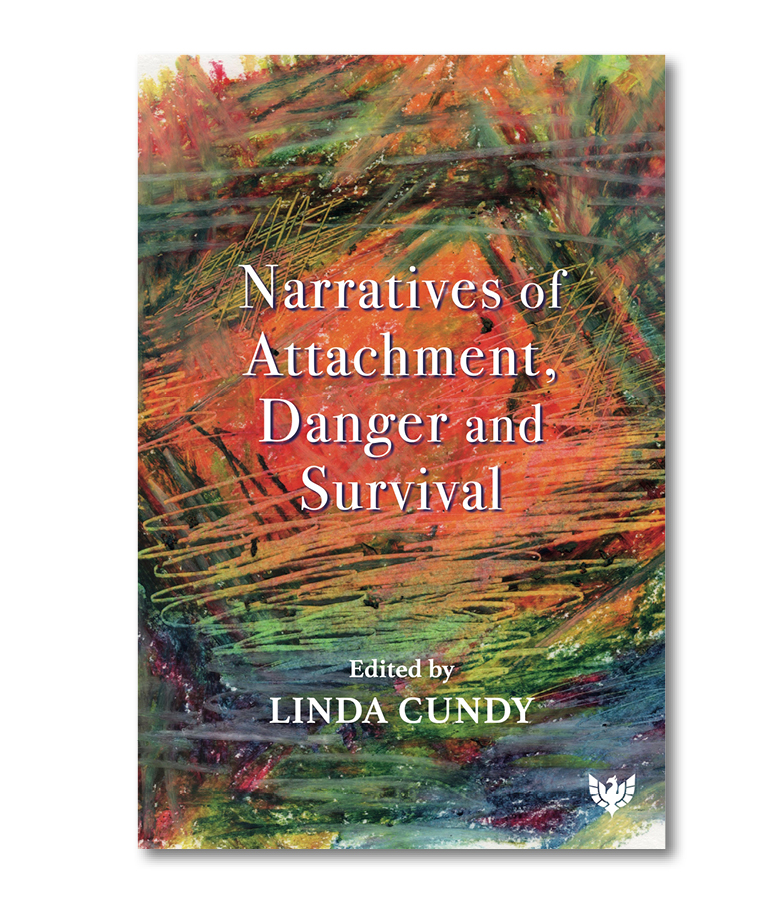
This edited collection includes contributions from Nancy Borrett, Charles Brown, Linda Cundy, Judy Davies, Cora Hart, Mary Kelly, Hyun Suk Lee, Zibiah Alfred Loakthar, Jacqueline Samuel, Joe Secrett, Ruthie Smith, and Maggie Turp.
The attachment imperative is at the heart of human nature; separation anxiety, loss, and bereavement are recognised as significant factors in distress, defences, and psychopathology. We need people in our lives to turn to for protection, comfort, and support, and these relationships – our relational environment – shape each of us. The groups we belong to equally contribute to our identities. As social, attachment-seeking animals, losing significant individuals, families, and social groups can be devastating. At its roots, attachment means survival.
Yet, sometimes, we find ourselves in situations within relationships of different kinds that have become unbearable. The agonising decision of whether to stay in a familiar reality or to break away strains the attachment system and internal resources. This is especially the case when living with trauma; rather than choose flight or fight, we choose freeze.
These chapters explore the challenges of leaving situations, environments, and relationships that have moulded identities but have become constricting, suffocating, alienating, or dangerous. In some cases, this entails breaking free from coercive control, abuse, or violence. The internal conflict between remaining or detaching oneself and leaving – or escaping – are examined. What does it take to make the decision to leave behind all that is familiar? To strike out alone, gambling on finding ‘the comfort of strangers’? What is lost, and hopefully gained? Why is there so often the magnetic pull to return to the unsatisfying or toxic relational environment? And what helps to break these unseen chains?
This inspiring collection of stories, brought together and beautifully curated by Linda Cundy, are ideal reading for professionals working with those in such situations, for individuals living with similar experiences, or those endeavouring to support loved ones from the sidelines.
 Linda Cundy is a UKCP-registered, attachment-based psychoanalytic psychotherapist and clinical supervisor with a private practice in North London. Trained as a counsellor in the 1980s, Linda worked for a number of years for mental health services until retraining at The Bowlby Centre in the 1990s. She is also an independent trainer and conference speaker, nationally and internationally, specialising in attachment, human development, and clinical practice. Linda has curated, edited, and contributed to six books to date and is series editor for the Psychotherapy Matters series published by Karnac in association with the United Kingdom Council of Psychotherapy (UKCP).
Dr Zack Eleftheriadou, fellow, British Psychological Society and member, Tavistock Society of Psychotherapists and The Bowlby Centre, UK –
‘Linda Cundy has created an original “storied community”, a collection of multicultural narratives of trauma, suffering, and extraordinary psychic survival. Each chapter (whether personal or “in dialogue”) describes the arduous journey: refugeedom, breaking away from toxic relationships, addiction, gangs, cults, and communities. I commend the authors for being able to formulate and relay accounts which are normally only shared in the privacy of the therapeutic sphere. It makes heart-wrenching reading but puts us in touch with the courage of the human spirit. This is an incredibly inspiring read that we can all learn from, clinicians and laypeople alike.’
Jeremy Holmes, MD FRCPsych, Hon Professor, University of Exeter, UK –
‘Horrific, terrifying, unbearable – I never thought those hyperbolic adjectives would apply to a psychotherapy book. But all ring true of this superbly curated collection of escape stories, and their painfully moving antecedents and consequences. A compelling read for all who work with victims of control, torture, abuse, coercion, and brainwashing, and the perverse attachments these engender. I was profoundly shaken by this book, but also somehow cleansed and uplifted.’
Gillie Jenkinson, PhD, UKCP-accredited psychotherapist and author of ‘Walking Free from the Trauma of Coercive, Cultic and Spiritual Abuse’ –
‘This is a compelling and readable book with life stories reflecting attachments which have become dangerous and harmful. Many are truly heartbreaking but also measured, educational, insightful, and ultimately hopeful. In my clinical work with survivors of coercive and cultic abuse, I am endlessly amazed at the resilience of the human spirit to rise from terrible and dangerous things. This book is packed full of such powerful, varied, and honest stories. I loved this book and was engaged throughout, and encouraged by the evidence that new attachments can be formed and that healing and recovery is possible.’
Dr Carine Minne, consultant psychiatrist in forensic psychotherapy and chair, International Psychoanalytical Association Violence Committee; and former editor-in-chief, International Journal of Forensic Psychotherapy –
‘Powerful, poignant, and deeply illuminating, Narratives of Attachment, Danger and Survival is a vital collection that gives voice to those who have endured harrowing experiences and emerged with stories of resilience and hope. Each chapter offers a raw and unflinching look at the complex journeys of escape, recovery, and survival. Whether you are a psychotherapist or a reader invested in trauma and recovery, Linda Cundy’s book will challenge, inspire, and move you with its unwavering commitment to truth and transformation.’
Jill Salberg, PhD, ABPP, faculty and clinical consultant, NYU Postdoctoral Program in Psychotherapy and Psychoanalysis –
‘In Narratives of Attachment, Danger and Survival, Linda Cundy has lovingly assembled a broad and powerful collection of authors and their stories. These chapters include deeply personal narratives of journeys through trauma and paths toward survival. The stories are of abusive relationships, cults, orthodox religious communities, drug addiction, gangs, poverty, racism, and political oppression. Woven through are attachment traumas, betrayals, and manipulations which force connective dependency and strip victims of their sense of identity, agency, and of their own worth. The detachment that is inevitably involved in escaping and surviving these traumas illuminates the strength and fortitude of the writers. While there are vast differences across the lives we read about, the grappling with terror, shame, and self-disgust, and the rebuilding of an inner sense of worth and goodness are very much equivalent. These are stories that must be told; they need to be read, witnessed, and honoured. We can learn much from these brave authors; through their stories, our work as caregivers, clinicians, and friends and relatives will be deeply enhanced.’