


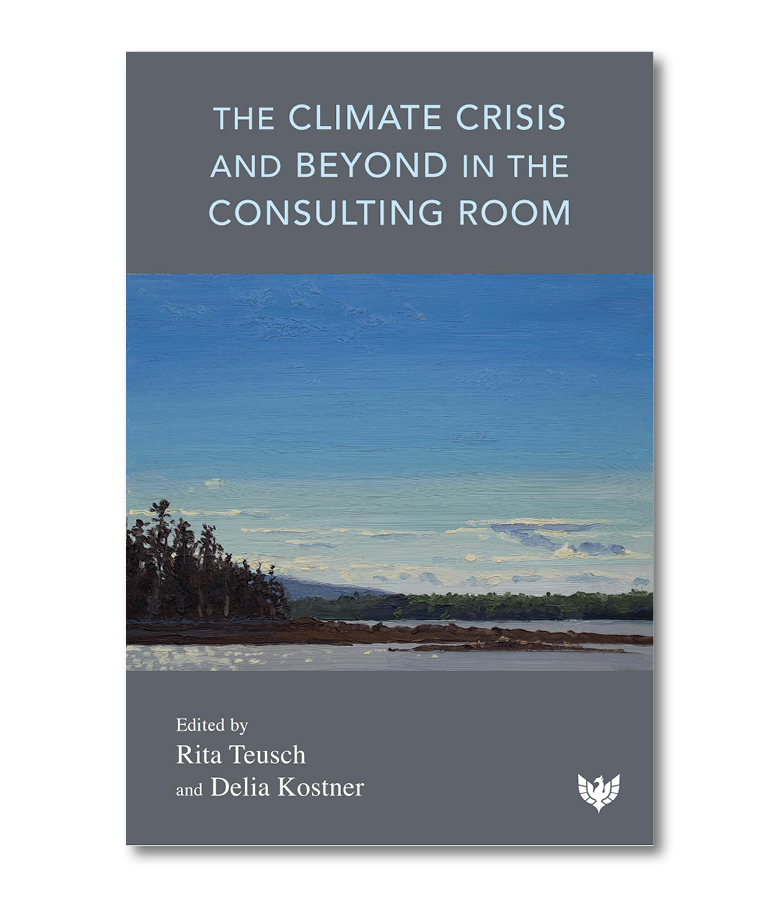
With contributions from Elizabeth Allured, Teresa Cochran, Martina Gast, Wendy Greenspun, Daniel Jacobs, Delia Kostner, Ines Schelhas, Daniel Sherrell, Penelope Starr-Karlin, Rita Teusch, and John Turtz, this volume covers a wide variety of topics related to patients’ response to the state of our planet.
The book addresses clinicians’ climate awareness and comfort addressing climate-related emotions. It offers insights into how psychoanalytic psychotherapists might broaden their thinking about the importance of the environment and effectively address climate distress with patients.
The content of this book is decidedly personal, with psychoanalysts and psychoanalytically oriented psychotherapists, as well as one young climate activist, reflecting on their experiences of becoming climate-aware, and what they have learned working with patients at this critical juncture in human history. The authors highlight how patients express eco-distress, how childhood traumas and present-day climate traumas may be interrelated, and how therapists need to be mindful of their countertransference reactions. The aims of this volume are to increase awareness of how environmental degradation impacts our psychological functioning, and to demonstrate how an openness to a reality-based discussion of the climate crisis will enable us to better hear and attune to our patients’ legitimate concerns about the state of our planet.
The Climate Crisis and Beyond in the Consulting Room provides climate information, inspiration, and clinical resources to enable clinicians to face climate reality and increase comfort with introjecting patients’ complex climate feelings.

 Rita Teusch, PhD, is a training and supervising psychoanalyst at the Boston Psychoanalytic Society and Institute, where she regularly teaches courses on Freud and Melanie Klein. She is a lecturer in psychiatry (psychology) part-time at Harvard Medical School, Cambridge Health Alliance. She is interested in the history and socio-cultural surround of psychoanalysis and has written on substance abuse, eating disorders, trauma, and gender in psychoanalytic journals and book chapters. She has a private practice in Harvard Square, Cambridge, MA.
Lindsay L. Clarkson, MD, Training and Supervising Analyst Emerita, Washington Baltimore Center for Psychoanalysis –
‘This volume of essays focuses on climate change from diverse authorial perspectives and presentations. The collection intends to inspire clinicians to field and respond to the range of emotional reactions evoked in coming to know our current state of environmental disruption, and to the defensive protections raised against such a recognition of interdependence, otherness, and vulnerability. Unusual in a psychoanalytic volume is the emphasis (in both clinicians and patients) on the connection between a more integrated understanding of self in continuous relation to the environment with the liveliness of a movement to climate action and increased engagement with the natural world.’
Sally Weintrobe, Fellow, British Psychoanalytical Society, author of ‘Psychological Roots of the Climate Crisis’ and ‘With Climate in Mind’ –
‘This book is a must-read for anyone – and especially for psychoanalysts and therapists – struggling with how to act on the climate crisis: facing it themselves, grappling with the complexities of addressing it with their patients, encouraging their institutions to take climate more seriously, and supporting groups, including local community groups, who are up against widespread cultural pressure to disavow climate reality. These authors give climate a home in their practice. A gem of a book that I highly recommend.’
Susan Bodnar, PhD, Practicing Psychologist, Adjunct Associate Professor at Teachers College, Columbia University, PI DEWLab –
‘This urgently needed volume insists on a truth clinicians can no longer avoid: the climate crisis is not a psychic fantasy to be interpreted away but a reality demanding our full attention. Rita Teusch, Delia Kostner, and their contributors show, with clinical precision and courage, that the real defense lies in denial itself – ours as much as our patients’ – inseparable from the sociopolitical forces that sustain it. Practitioner-focused and clinically grounded, this book gives therapists the language to finally let what happens in the consulting room meet the world outside it. A vital, beautiful contribution.’
Ira Brenner, MD, Clinical Professor of Psychiatry, Sidney Kimmel Medical College of Thomas Jefferson University; Training and Supervising Analyst, Psychonanalytic Center of Philadelphia –
‘Finally! Psychoanalytic thinking has fully taken on the challenge of adapting, or not adapting, to today’s changing environment. This beautifully written and expertly edited volume will deeply influence the reader. From research data identifying those groups most likely to be traumatized plus supporting clinical material from therapy sessions to scientific facts, the role of activism, and the broader implications for humanity, this volume addresses the crucial interrelationship between our mental life with the reality of climate change. Contemporary psychoanalysis has much to offer us in these uncertain times. This book should be read by all clinicians and lay people who need a deeper understanding of the crisis through which we are all living.’
Jack Foehl, PhD, Past President and Training and Supervising Analyst, Boston Psychoanalytic Society and Institute; Associate Professor, New York University Postdoctoral Program in Psychotherapy and Psychoanalysis –
‘How do we experience the climate emergency in our personal and professional lives? How can we find ways to speak about this experience that allow us to share and deepen it? This compelling book moves between stark experience and process, between struggling realization and the hard work of coming to terms. Through riveting encounters in the consulting room, vivid conversations among colleagues and students, and parents struggling to hold fear and hope for their children, we are brought close to the climate emergency as it is actually lived—and to the possibilities for transformation that can emerge when we face it together.’
Susan Kassouf, PhD, LP, Member, National Psychological Association for Psychoanalysis, American Psychoanalytic Association, and International Psychoanalytical Association –
‘This book is an outstanding example of what psychoanalysis can be on our planet in extremis. Rita Teusch and Delia Kostner have assembled a powerful group of climate-aware therapists, thought leaders, and activists who are also very gifted writers. Together, they guide, challenge, hold, struggle, act, and endure. And they listen—for the unconscious in their patients, their institutes, their communities, and in themselves. Accept their invitation to join them on these clinical, theoretical, and civic journeys.’
Renée Lertzman, PhD, Founder, Project InsideOut, , author of ‘Environmental Melancholia-Psychoanalytic Dimensions of Engagement’ –
‘This is the kind of book I hand to colleagues who ask why I keep insisting on psychoanalytic thinking in climate work. Rita Teusch and Delia Kostner have edited a collection that treats the unconscious as central to the ecological crisis, not incidental to it: the defenses that let us look away, the disavowal that keeps us functioning, and the losses too large to metabolize through the usual channels. What sets this book apart from most climate psychology is its clinical grounding. These contributors have spent years learning to work with what people cannot yet say to themselves, and they bring that training to a crisis that has, so far, mostly been addressed through behavior change models and communication campaigns. The chapters here ask a harder question: What does it actually mean to come to terms with how we got here, and how do we move forward without inflicting more disruption than the crisis already has? The answers offered are rooted in care, in repair, and in the relational intelligence that clinical work teaches and climate discourse badly needs. This is a strong addition to an already valuable series and lineage of thinkers—and it belongs on the shelf of anyone doing this work.’
Bill McKibben, Schumann Distinguished Scholar in Environmental Studies, Middlebury College, author of ‘Here Comes the Sun’ –
‘The climate crisis is so vast that every discipline—economics, political science, physics, theology—comes into play, and psychiatry is of course no exception; indeed, it’s central to making progress. This fascinating volume helps distill current understanding and point in new directions for research and inquiry.’
Lynne Zeavin, Psy.D., Training and Supervising Analyst, coeditor of ‘With Climate in Mind’ –
‘The Climate Crisis and Beyond in the Consulting Room offers us an invaluable resource that arrives not a moment too soon. This collected volume of papers represents a crucial intervention and resource for thinking about the climate crisis—and how climate anxieties, denial, and fear surface in the room with patients. This book gives clinicians both a language and a framework for thinking with our patients about the most fundamental issue of our time.’