About the editors
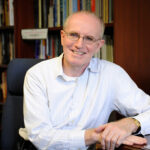
Michael O’Loughlin, PhD, is professor in the College of Education and Health Sciences and in the PhD and PsyD programs in Derner School of Psychology at Adelphi University, New York. He has authored or edited many books, including, most recently, Precarities of 21st Century Childhoods: Critical Explorations of Time(s), Place(s), and Identities (2023). He writes on intergenerational trauma, psychosis, childhood subjectivity, refugee and social justice issues, fascism, and populism. Since 2018 he has been co-editor of the journal Psychoanalysis, Culture and Society. He is also editor of the book series, Psychoanalytic Interventions: Clinical Social, and Cultural Contexts, and co-editor of the book series Critical Childhood & Youth Studies: Theoretical Explorations and Practices in Clinical, Educational, Social, and Cultural Contexts, both published by Lexington Books/Bloomsbury. He is a founding scholar of the British Psychoanalytic Council. He founded and directs the Adelphi Asylum Project. He has a private practice for psychotherapy and psychoanalysis on Long Island, NY. His website is michaeloloughlinphd.com.
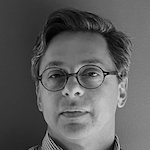 Louis Rothschild, PhD, is a clinical psychologist in Baltimore County, Maryland. Specializing in psychoanalytic psychotherapy, he also provides supervision and occasionally reviews manuscripts. His publications have ranged from quantitative to qualitative, social-cognitive to psycho- analysis, and clinical to philosophical. Regarding recent writing, in 2024, he completed the book Rapprochement Between Fathers and Sons: Breakdowns, Reunions, Potentialities in addition to penning an epilogue for Salman Akhtar’s edited book Truth: Developmental, Cultural, and Clinical Realms. He also co-edited and contributed a chapter to the 2023 Gradiva-nominated Precarities of 21st Century Childhoods: Critical Explorations of Time(s), Place(s), and Identities with Michael O’Loughlin and Carol Owens. Moreover, he penned a chapter for Salman Akhtar’s and Lisa Crilley’s The Joy of Torment: Understanding and Managing Sadomasochism. He and his wife can often be found working in their garden, where they aim to keep their home from being overrun.
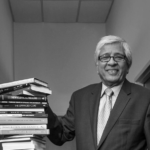 Salman Akhtar, MD, is Professor of Psychiatry at Jefferson Medical College and a Training and Supervising Analyst at the Psychoanalytic Center of Philadelphia. He has served on the editorial boards of the International Journal of Psychoanalysis, the Journal of the American Psychoanalytic Association, and the Psychoanalytic Quarterly. His more than 400 publications include 125 books, of which the following 24 are solo-authored: Broken Structures (1992), Quest for Answers (1995), Inner Torment (1999), Immigration and Identity (1999), New Clinical Realms (2003), Objects of Our Desire (2005), Regarding Others (2007), Turning Points in Dynamic Psychotherapy (2009), The Damaged Core (2009), Comprehensive Dictionary of Psychoanalysis (2009), Immigration and Acculturation (2011), Matters of Life and Death (2011), The Book of Emotions (2012), Psychoanalytic Listening (2013), Good Stuff (2013), Sources of Suffering (2014), No Holds Barred (2016), A Web of Sorrow (2017), Mind, Culture, and Global Unrest (2018), Silent Virtues (2019), Tales of Transformation (2021), In Leaps and Bounds (2022), In Short: Private Notes of a Psychoanalyst (2024), and Monasteries, Mausoleums, Museums: Psychoanalytic Architecture of the Soul (2027).
Dr Akhtar has delivered many prestigious invited lectures including a Plenary Address at the 2nd International Congress of the International Society for the Study of Personality Disorders in Oslo, Norway (1991), an Invited Plenary Paper at the 2nd International Margaret S. Mahler Symposium in Cologne, Germany (1993), an Invited Plenary Paper at the Rencontre Franco-Americaine de Psychanalyse meeting in Paris, France (1994), a Keynote Address at the 43rd IPA Congress in Rio de Janiero, Brazil (2005), the Plenary Address at the 150th Freud Birthday Celebration sponsored by the Dutch Psychoanalytic Society and the Embassy of Austria in Leiden, Holland (2006), the Inaugural Address at the first IPA-Asia Congress in Beijing, China (2010), and the Plenary Address at the Fall Meetings of the American Psychoanalytic Association in 2017.
Dr Akhtar is the recipient of numerous awards including the American Psychoanalytic Association’s Edith Sabshin Award (2000), Columbia University’s Robert Liebert Award for Distinguished Contributions to Applied Psychoanalysis (2004), the American Psychiatric Association’s Kun Po Soo Award (2004) and Irma Bland Award for being the Outstanding Teacher of Psychiatric Residents in the country (2005). He received the highly prestigious Sigourney Award (2012) for distinguished contributions to psychoanalysis. In 2103, he gave the Commencement Address at graduation ceremonies of the Smith College School of Social Work in Northampton, MA.
Dr Akhtar’s books have been translated in many languages, including German, Italian, Korean, Romanian, Serbian, Spanish, and Turkish. A true Renaissance man, Dr Akhtar has served as the Film Review Editor for the International Journal of Psychoanalysis, and is currently serving as the Book Review Editor for the International Journal of Applied Psychoanalytic Studies. He has published 11 collections of poetry and serves as a Scholar-in-Residence at the Inter-Act Theatre Company in Philadelphia.



Tom Derose, Research Manager at Freud Museum London –
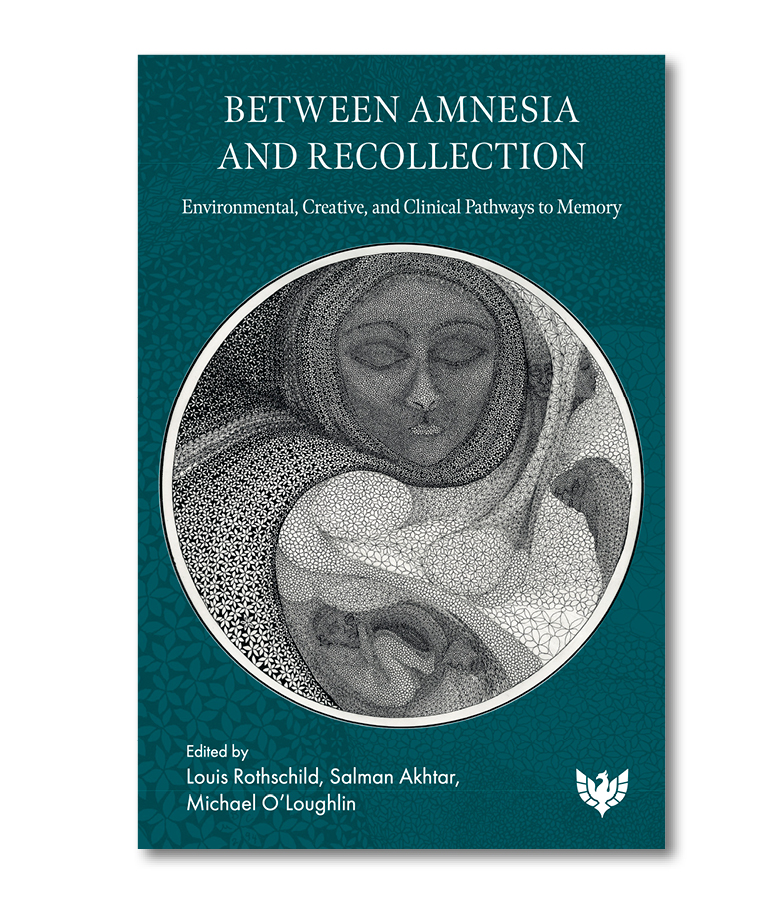
‘Between Amnesia and Recollection is a treasure trove of insights into the mysterious and multifaceted world of memory. The editors have gathered together an impressive group of contributors who each offer a personal perspective on the topic, the cumulative effect of which is both satisfying and compelling. It is a book that I’ll be returning to many times.’
Ana Archangelo, Faculty of Education, State University of Campinas, Brazil –
‘Between Amnesia and Recollection: Environmental, Creative, and Clinical Pathways to Memory is a courageous and beautiful work. It ventures into the delicate space between remembering and forgetting, exploring memory as an essential dimension of the experience of living. The authors approach questions that have no definitive answers—with openness, and, above all, remarkable sensitivity and care. They thoughtfully explore the interplay of personal and collective history, relationships, feelings, creativity, the arts, and the unsymbolized, while reflecting on the place of psychoanalysis within this intricate web. This sensitivity and delicacy are among the book’s most distinctive qualities, forming a common thread throughout its chapters.’
Dr Claude Barbre, Ph.D., L.P Distinguished Full Professor, The Chicago School College of Professional Psychology –
‘In contrast to how Zeus in Greek mythology mixes and determines the fates of humankind from two jars (pithoi)—one filled with pain and the other with blessings—to open this collection of essays edited by Rothschild, O’Loughlin, and Akhtar is to imagine instead Mnemosyne, the Greek goddess of memory and remembrance, composing and gifting to us, with her Muse daughters, languages, arts, forms, and pathways of human recollection intermingled with the Lethe waters of forgetfulness and amnesia, all drawn from the living vessels of each unique person. Mnemonic reveries of music, memoirs, constructions, concealments, and rebirths flow from these narratives, stories of sorrows and blessings destined to be shared.’